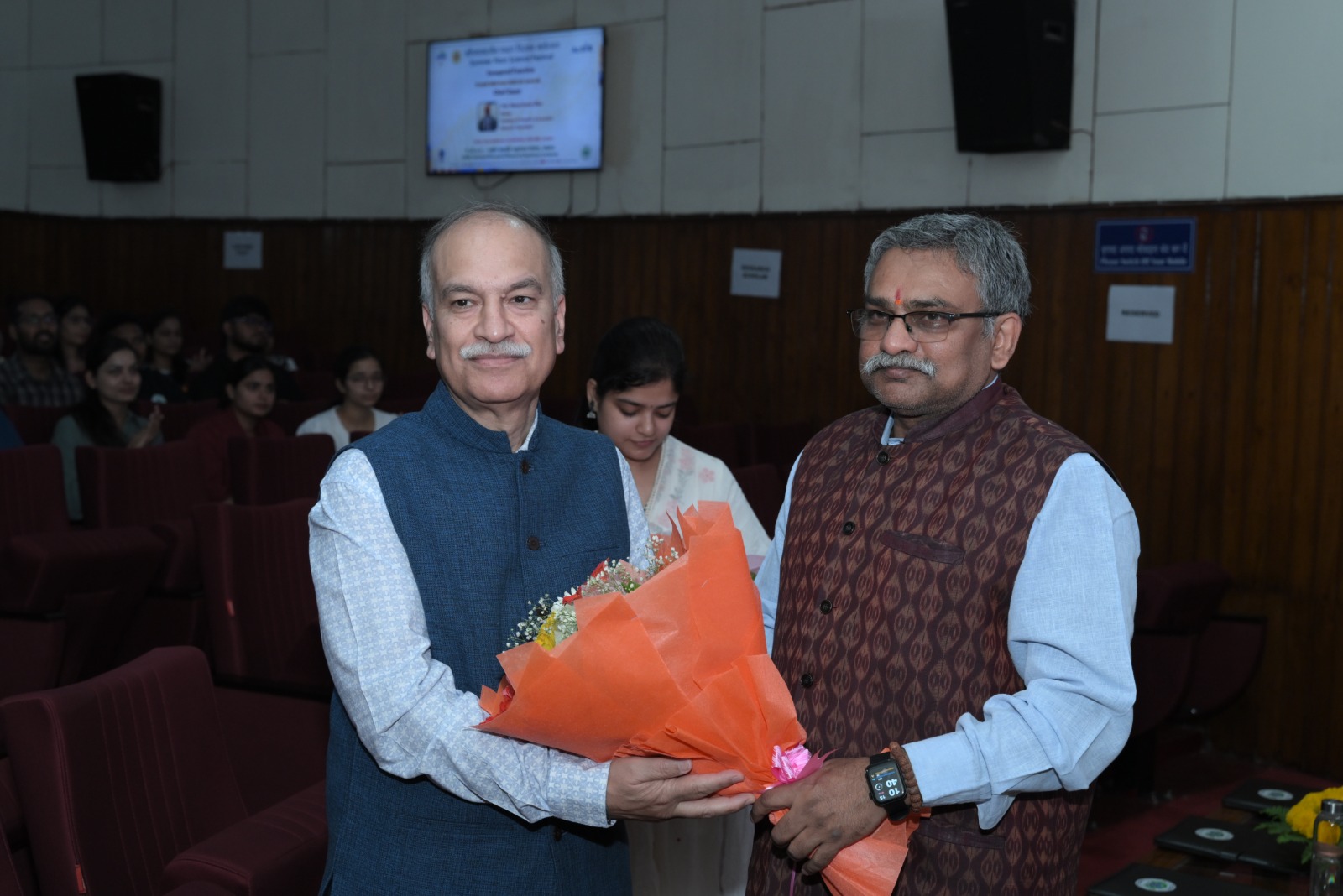
Lucknow: A two-day Summer Plant Science Festival (SPSF) 2026 was inaugurated today at CSIR–National Botanical Research Institute (CSIR–NBRI), Lucknow. Prof. Manoj Kumar Dhar, Director of Academy of Scientific and Innovative Research (AcSIR), Ghaziabad, graced the occasion as the Chief Guest.
Welcoming the dignitaries, Dr. Ajit Kumar Shasany, Director, CSIR–NBRI, stated that this unique science festival, initiated in 2018, is organized by the research scholars of the institute. The festival commemorates April 13, 1953, the day when the National Botanic Garden (now CSIR–NBRI) was adopted by the Council of Scientific and Industrial Research (CSIR), New Delhi, as its sixth national laboratory.
Dr. Shasany emphasized that the festival aims to uncover and promote the hidden talents of research scholars, fostering confidence and enthusiasm to address emerging scientific challenges. He also highlighted the importance of bridging the gap between India’s traditional knowledge systems and modern science by scientifically validating the country’s rich and often underexplored heritage.
Students from Shri Gurukul Gurukripa Vidyapeeth, Ved Pathshala, Tihura Majha, Darshan Nagar was also invited to be part of the science festival. The Gurukul students chanted Vedic mantras during the inauguration, adding a traditional and spiritual dimension to the opening ceremony.

Dr. Poonam C Singh, Scientist-F and Coordinator of the festival, outlined the key highlights of the event. She informed that the festival features a range of activities including oral and poster presentations on diverse aspects of plant sciences, quiz competitions, painting, digital photography, and treasure hunts. Approximately 200 research scholars are participating, with 19 oral presentations and 32 poster presentations scheduled across various sessions.
In his address, Prof. Dhar congratulated the research scholars for their initiative and underscored that research and inquiry are fundamental to discovering truth. He noted that although plants do not speak, they are living organisms that respond to stimuli and may be regarded as silent yet dynamic forms of life.
He further stressed the importance of strong foundational understanding for advancing scientific knowledge. Highlighting the essence of research, he remarked that meaningful inquiry requires the ability to view problems from perspectives beyond conventional thinking. He encouraged scholars to step beyond laboratory boundaries, engage in dialogue, and apply their knowledge to address real-world societal challenges.
Later in the day, in his keynote address on “Demystifying Saffron,” Prof. Dhar presented a comprehensive overview of saffron (Crocus sativus), highlighting its historical significance and its status as the world’s most expensive spice due to labor-intensive harvesting. He elaborated on its unique sterile triploid nature, vegetative propagation through corms, and the biochemical basis of its color, aroma, and flavor. He also discussed its cultivation—particularly in Kashmir—along with its economic and medicinal importance, while emphasizing ongoing efforts to enhance yield and address key scientific challenges.